

There is a small strip of metal that sits quietly at the edge of your roof, doing one of the most important jobs in your entire home’s water management system. It is called drip edge flashing, and most homeowners have never heard of it until the damage is already done.
If your roof was installed without it – or if it was done incorrectly – water is not draining the way it should. And when water does not drain properly, your fascia pays the price.
What Is Drip Edge Flashing, and Why Does It Exist?
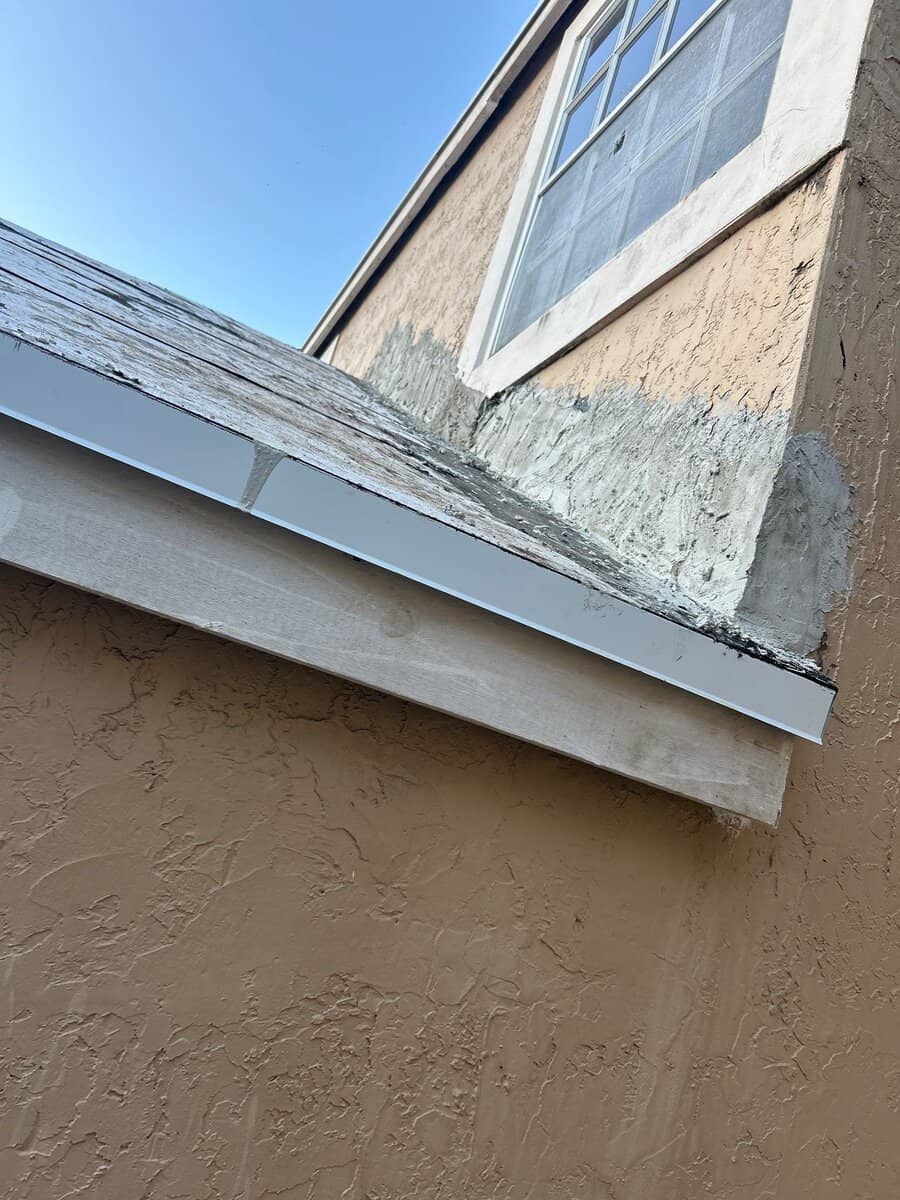
Drip edge flashing is a piece of metal – typically aluminum or galvanized steel – installed along the eaves and rakes of a roof. Its job is to direct water away from the roof deck and into the rain gutter below, rather than allowing it to run back under the asphalt shingles or soak into the wood behind the fascia board.
The flange of the drip edge extends outward over the gutter, creating a clean path for surface runoff to follow. Without it, water follows the path of least resistance – which is often straight into your fascia, your soffit, and eventually your home’s interior framing.
The Eaves vs. The Rakes: Does It Matter Where It Goes?
Yes, and this is where even experienced roofers sometimes cut corners.
At the eaves – the horizontal edges at the bottom of your roof – drip edge is installed before the underlayment. At the rakes – the slanted edges along the sides of a gable roof – it goes on top of the underlayment. These two placements are not interchangeable, and installing them in the wrong order defeats the entire purpose of the system.
The Asphalt Roofing Manufacturers Association (ARMA) has published installation guidelines that specify exactly how drip edge should be applied in both locations. Following those guidelines is not optional if you want your roof system to perform the way it was designed to.
What Happens When You Skip It
Let’s be direct: skipping drip edge flashing is one of the most common reasons fascia boards rot prematurely. And in Boca Raton, where afternoon downpours are a near-daily event for several months out of the year, the consequences show up faster than you might expect.
Water Finds Every Weakness
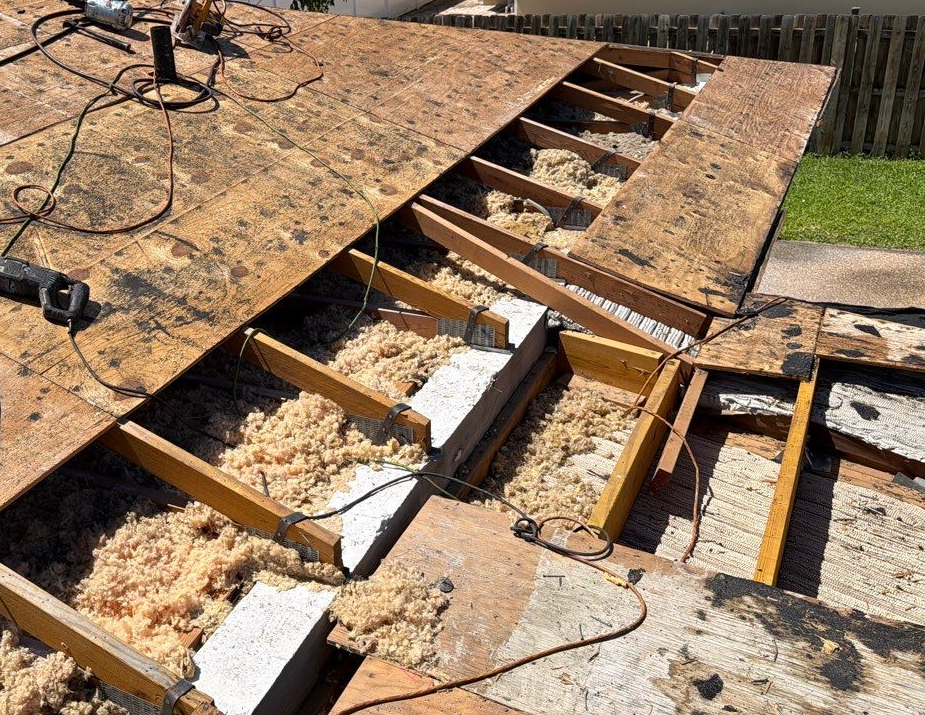
When there is no drip edge at the eaves, rainwater lifts slightly under the first course of asphalt shingles and begins saturating the roof deck. The deck is typically wood – often plywood or oriented strand board – and repeated moisture exposure causes it to swell, delaminate, and eventually rot.
The fascia board, which is the vertical wooden board running along the edge of your roofline, absorbs this runoff directly. Over time, the paint blisters, the wood softens, and the structural connection between your roof edge and your gutter system starts to fail.
Ice Dams Are Less Common Here, but the Concept Still Applies
In colder climates, drip edge helps manage ice dam formation at the eaves. While ice dams are not a concern in South Florida, the underlying principle is the same: without a properly installed metal barrier at the roof edge, water finds its way into places it should never reach.
Even without freezing temperatures, water intrusion at the eave line creates the same long-term damage. Rotted fascia, compromised decking, and damaged soffits are just as common here as anywhere else – they just develop through rain and humidity rather than snowmelt.
Your Gutters Suffer Too
Rain gutters are designed to catch water as it drips off the roof edge. When drip edge flashing is missing, water does not always make it into the gutter. It runs along the underside of the shingles, drips behind the gutter, and pools against the fascia instead.
Over time, this causes the gutter to pull away from the fascia as the wood behind it weakens. The gutter system becomes less effective, and the repairs required to fix both the gutters and the fascia board become significantly more expensive than simply installing drip edge correctly the first time.
What Good Drip Edge Flashing Looks Like
Not all drip edge is the same. The material, the profile, and the installation method all matter.
Material Options: Aluminum vs. Galvanized Steel
The two most common materials are aluminum and galvanized steel. Aluminum is lightweight, rust-resistant, and widely used in residential roofing. Galvanized steel – which goes through a hot-dip galvanization process to protect against corrosion – is heavier and more rigid, making it a strong choice in areas with high wind exposure.
Plastic drip edge does exist, but it is generally not recommended. It becomes brittle over time, especially under prolonged UV exposure, and does not hold up as well as metal alternatives.
The Three Common Profiles
Drip edge typically comes in three profiles, sometimes labeled Type C, Type D, and Type F – though naming conventions vary by manufacturer.
Type C has a simple L-shaped flange. Type D includes a small kick-out that provides more clearance between the drip edge and the fascia board, allowing water to fall cleanly into the gutter. Type F is a wider profile often used on re-roofing jobs where the new shingles need to meet an existing fascia line cleanly.
The right profile depends on your roof’s specific geometry, your gutter setup, and whether this is new construction or a replacement.
Fasteners and Overlaps
Proper installation requires the right fasteners – roofing nails or screws appropriate for the material – and correct overlap between sections. Each piece of drip edge should overlap the next by at least one inch, and the overlap should always run in the direction of water flow to prevent gaps that allow moisture infiltration.
ARMA recommends following manufacturer guidelines for fastener spacing, which is typically no more than 12 inches apart. Getting this wrong is one of the most common installation errors on DIY and budget roofing jobs.
How Drip Edge Affects Your Roof Warranty
This is a detail most homeowners do not find out until it is too late.
Many roofing manufacturers – particularly those producing asphalt shingle and bitumen-based roofing systems – require drip edge installation as a condition of their product warranty. If your roof was installed without it, and you later file a warranty claim for edge-related damage, there is a real chance that claim gets denied.
The Asphalt Roofing Manufacturers Association has long advocated for drip edge as a best practice standard, and many building codes now require it on new construction. In Florida, the Florida Building Code has specific provisions for roof edge flashing that align with this standard.
If you are not sure whether your current roof has drip edge or whether it was installed correctly, a professional inspection can answer both questions quickly.
What Boca Raton Homeowners Should Know Specifically
Boca Raton’s climate puts a lot of pressure on roof edges. The combination of intense UV exposure, high humidity, and frequent heavy rainfall creates conditions where improper water management compounds quickly.
Fascia boards here do not have the luxury of drying out slowly between rain events. When water gets behind the drip edge – or when there is no drip edge at all – the wood stays damp for long enough to invite mold, rot, and eventually insect damage. This is not a slow-moving problem in this environment. It accelerates.
If you are getting a new roof installed or having repairs done, make sure drip edge flashing is part of the conversation. Ask your contractor to show you where it is going, which profile they are using, and how they are handling the transition between the eaves and the rakes. A contractor who cannot answer those questions clearly is one worth being cautious about.
Frequently Asked Questions
Is drip edge required by code?
In Florida, yes. The Florida Building Code requires drip edge on residential roofing systems. Any licensed contractor operating in Boca Raton should be installing it as a matter of standard practice.
Can drip edge be added to an existing roof?
It can, but it requires lifting the first course of shingles at the eaves, which should be done carefully to avoid breaking the shingle seal. At the rakes, the process is somewhat more straightforward. It is best handled by a professional who can assess the condition of the underlying deck and fascia before adding the new flashing.
What if my fascia is already rotting?
Rotted fascia needs to be replaced before new drip edge is installed. Installing flashing over compromised wood does not solve the problem – it just covers it up. A proper repair includes removing the damaged wood, inspecting the decking behind it, and installing new fascia before the drip edge and gutter system are reinstalled.
Does drip edge affect gutters?
Yes, directly. The drip edge’s flange is designed to direct water into the gutter. When drip edge is missing or improperly installed, gutter performance drops significantly, and the fascia behind the gutter takes on moisture it was never meant to handle.
Protect Your Fascia With Proper Drip Edge Flashing
Drip edge flashing is a small detail with large consequences. Skipping it – or installing it wrong – sets off a chain of water damage that works quietly until your fascia is rotting, your deck is compromised, and your gutters are pulling away from the house. At Whale Roofing and Construction, every roofing project includes proper edge flashing as part of a complete, code-compliant system. If you are unsure whether your current roof has it, reach out to learn more about our roof repair services or call us at (561) 408-4433 to schedule a free inspection.