

You get a quote for a new roof, and the number feels manageable. Then the old shingles come off, and suddenly your roofer is standing in your driveway telling you there’s rotted plywood underneath. That original estimate? It just changed.
This happens more often than most homeowners expect – and it catches people completely off guard when they’re already in the middle of a roofing project. Understanding what rotten plywood actually does to your roof decking replacement cost can help you prepare financially and avoid the panic that comes with mid-project surprises.
Why Plywood Is the Foundation of Your Entire Roof
Before getting into the cost side of things, it helps to understand what roof decking actually is and why it matters so much.
Roof decking – sometimes called roof sheathing – is the layer of plywood or oriented strand board (OSB) that sits directly on top of your home’s wooden frame. It’s the solid surface that everything else gets nailed to, including your roof shingles, underlayment, and any other roofing materials. Think of it as the floor of your roof system.
When that plywood is compromised, nothing above it is truly secure. A weak deck means weak fastener hold, and weak fastener hold means your roof shingles or tiles are far more vulnerable to wind uplift – which is a serious concern for any home in South Florida.
What Causes Plywood to Rot in the First Place
Plywood rots when moisture gets in and stays in. In a climate like Boca Raton, that’s not a rare event – it’s practically a recurring reality.
Heavy rain, humidity, and heat cycling create ideal conditions for wood decay. If your attic doesn’t have proper ventilation, moisture can build up from the inside. If your old roof had cracked or missing shingles even briefly, water could have been seeping in long before you noticed any interior damage.
Other common culprits include:
- Clogged gutters that allow water to back up under the drip edge
- Flashing failures around vents, chimneys, or skylights
- Long-term condensation in an under-ventilated attic space
- Aging asphalt shingle granule loss that reduces water-shedding ability
The tricky part is that rotted decking often isn’t visible from inside your home until the damage is already widespread.
How Roofers Discover Rotted Decking
Most homeowners assume the roofer will know about the decking condition before the project starts. The reality is that it’s nearly impossible to fully assess the state of your plywood without removing the existing roof covering first.
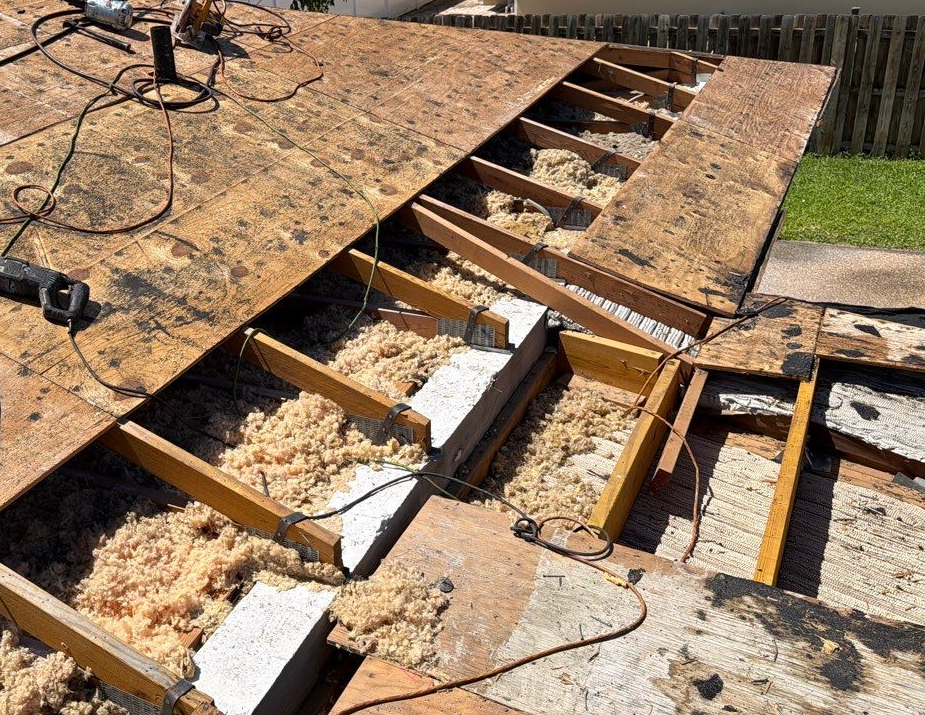
During a full roof replacement, the crew strips away the old shingles and underlayment. That’s when the deck is finally exposed and can be walked, probed, and inspected in full. Soft spots, discoloration, visible mold or fungal growth, and crumbling edges are all signs that sections – or entire fields – of plywood need to come out.
Some roofers will note visible warning signs during an inspection, such as sagging roof planes or discoloration visible from the attic. But the complete picture only comes once tear-off is done.
The Real Impact on Roof Decking Replacement Cost
Here’s where things get specific. When rotted plywood is discovered mid-project, you’re looking at costs that weren’t in your original estimate. The extent of those additional costs depends entirely on how much decking needs to be replaced.
Cost Per Sheet of Plywood
Roof decking replacement is typically priced by the sheet. A standard sheet of 4×8 plywood used in domestic roof construction measures 32 square feet. Based on recent pricing data from sources like HomeGuide, replacement costs – including labor – generally range from roughly $70 to $100 per sheet, depending on material thickness, local labor rates, and current wood prices.
That might not sound alarming. But here’s the math: if you have a 2,000 square foot roof and 30% of the decking needs replacement, you’re looking at roughly 19 or 20 sheets. At those rates, you could be adding $1,400 to $2,000 or more to your total bill before the new shingles even go on.
Labor Is Where It Gets Expensive
The cost of the plywood itself is only part of the equation. Cutting out damaged sections, removing the old material, disposing of it properly, and installing new sheets all require time and skilled labor.
If the rot is scattered across the deck in uneven patches, the work becomes more labor-intensive than replacing a full continuous section. Workers have to cut carefully around the good wood, fit new pieces precisely, and make sure every new sheet is properly fastened to the rafters below. That precision takes time.
What Affects the Total Added Cost
Several variables will influence how much rotted decking actually adds to your roof decking replacement cost:
- Extent of damage: A few isolated sheets are very different from half your deck being compromised.
- Roof size and pitch: Steeper roofs and larger decks both increase labor time.
- Plywood thickness: Most residential applications use 1/2-inch or 5/8-inch plywood. Thicker material costs more.
- Accessibility: Sections over additions, complex roof geometry, or areas near the soffits and siding can be harder to access.
- Current material costs: Lumber pricing has fluctuated significantly in recent years and can vary.
For comparison, homeowners in other parts of the country – including high-cost markets like the San Francisco Bay Area or parts of California – often report even higher per-sheet costs due to regional labor and material pricing. In Boca Raton, pricing tends to be more moderate, but South Florida’s storm-driven demand can influence availability and cost as well.
How This Affects Your Home Insurance Claim
If you’re replacing your roof because of storm damage, there’s a good chance your home insurance policy is involved. Rotted plywood adds an important wrinkle to that situation.
Insurance companies typically cover damage that results from a covered peril – a sudden event like a hurricane or falling debris. Damage that is deemed to have developed gradually due to neglect or deferred maintenance is usually not covered. Rot that built up over years often falls into that second category.
This is why documentation matters. A thorough inspection, photos from the tear-off, and a clear explanation from your roofer about the source of the damage can all support your case if you believe the rot was storm-related. Understanding your policy’s language around replacement value versus actual cash value also affects what you’ll receive if the claim is approved.
Working with a roofing company that understands this process and can communicate clearly with your adjuster can make a real difference in what you ultimately pay out of pocket.
Can Rotted Decking Be Skipped or Patched Over?
This question comes up more than you’d think, usually from homeowners who are budget-conscious and hoping for a workaround.
The honest answer is no – not responsibly.
Installing new roofing materials over compromised plywood is a code violation in most jurisdictions, and for good reason. If the deck can’t hold a fastener securely, your shingles or tiles will fail under wind load far sooner than they should. Beyond code compliance, installing over rot also voids most manufacturer warranties on roofing materials.
A licensed roofer who is doing the job correctly will always replace damaged decking. If a contractor offers to skip it to save money, that should raise a serious red flag.
What Clean Roofing Practices Actually Look Like
A professional roofing crew doesn’t just install new materials and leave. After tear-off, they inspect the deck carefully, mark any soft or damaged areas, and replace what needs to go before anything else is done.
This approach ensures the new roofing materials are installed on a sound surface. It also means the homeowner gets full transparency about what was found and what was done, rather than discovering problems later.
At Whale Roofing & Construction, every roof replacement starts with a proper deck inspection once the old material is removed. If plywood replacement is needed, the crew handles it with in-house employees – not subcontractors – so quality and accountability stay consistent throughout the project.
How to Prepare for the Possibility of Additional Decking Costs
If you’re planning a roof replacement, the smartest thing you can do financially is build a contingency into your budget from the start.
A general rule of thumb: set aside an additional 10 to 20 percent of your total roofing estimate to cover the possibility of decking replacement. On a $12,000 roof job, that means having $1,200 to $2,400 available as a buffer.
Also ask your roofer upfront how they handle decking discoveries. Do they notify you before replacing sheets? Do they price it by the sheet or by the square? Is the labor included in a per-sheet rate? Understanding the process before work begins prevents unwelcome surprises once your roof is open.
Signs Your Roof Might Already Have Decking Problems
You don’t always have to wait until tear-off to suspect decking damage. Some observable signs can point you in the right direction:
- Visible sagging or dipping along roof planes when viewed from the street
- A spongy feel when walking on the roof during inspection
- Staining or soft spots visible in the attic
- Granule loss and age-related deterioration in existing asphalt shingles that has been present for an extended period
- Dark streaking or mold visible along the underside of roof sheathing from inside the attic
If you’re noticing any of these, a professional inspection before scheduling a full replacement gives you better information going into the project.
How to Budget for Roof Decking Replacement Cost
Rotted plywood is one of those hidden costs that can genuinely shift your budget if you’re not prepared for it. But it’s not a scam or an upsell – it’s a structural reality that affects the performance and longevity of your entire roof. Knowing how roof decking replacement cost works before your project begins puts you in a much stronger position. If you’re in Boca Raton and ready to get a clear, honest assessment of your roof’s condition, reach out to Whale Roofing & Construction at (561) 408-4433 to schedule your free inspection today.