

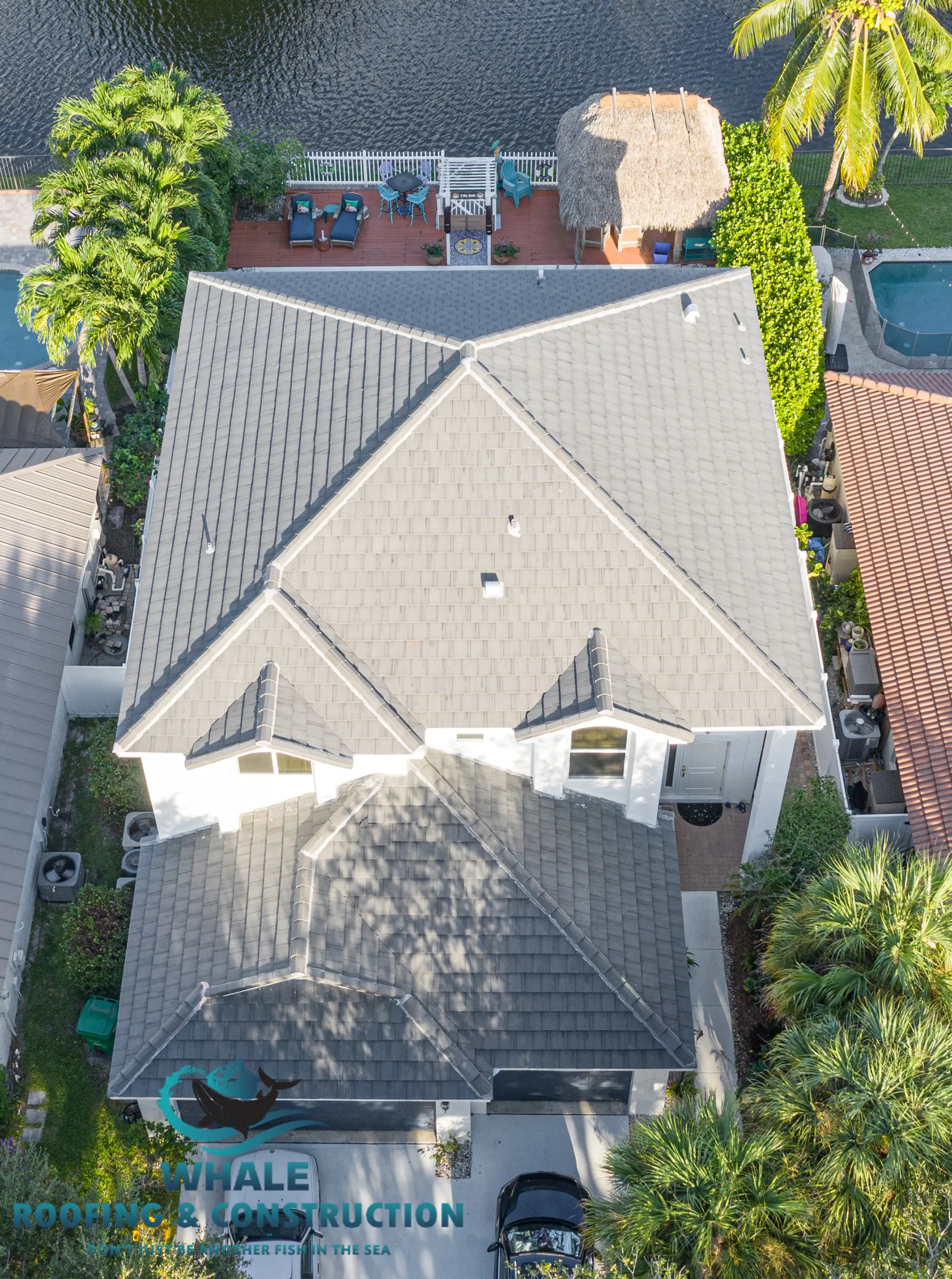
If you’ve started researching roofing options, you’ve probably run into these two terms more than once: architectural shingles and 3-tab shingles. And if you’re like most homeowners, you’re wondering whether the difference is just cosmetic, or if one actually performs better than the other.
The short answer? Thickness matters – a lot. And when you live in a place like Boca Raton, FL, where the weather can go from blazing sun to a serious storm in under an hour, the type of shingle you choose can mean the difference between a roof that lasts and one that doesn’t.
Let’s break this down in plain English so you can make a confident, informed decision.
What Are 3-Tab Shingles, Exactly?
The “3-tab” name comes from the three evenly spaced cutouts along the bottom edge of each shingle strip. These cutouts make it look like you have three separate shingles when really it’s one flat piece.
3-tab shingles have been around for decades. They’re lightweight, affordable, and straightforward to install. For a long time, they were the default choice for residential roofing across the country.
The problem is that “default” doesn’t always mean “best.” Especially not in South Florida.
What Are Architectural Shingles?
Architectural shingles – also called dimensional or laminate shingles – are made by bonding multiple layers of asphalt together. That layering is exactly what gives them their name and their advantage.
Because they’re built in layers, they have a textured, three-dimensional appearance that mimics the look of wood shake or slate. But more importantly, that extra thickness adds real structural strength to your roof system.
They’re heavier, denser, and engineered to handle more stress than a flat, single-layer 3-tab shingle ever could.
Architectural Shingles vs. 3-Tab: The Core Differences
Let’s get into the specifics of what sets these two apart, beyond just the way they look.
Weight and Thickness
Architectural shingles typically weigh around 50% more per square than 3-tab shingles. That extra mass isn’t just filler – it directly affects how well the shingle resists uplift, impact, and wind pressure.
A 3-tab shingle is essentially a single ply of asphalt with granules embedded on top. Architectural shingles are laminated, meaning two or more layers are fused together. That lamination process changes everything about how the shingle performs under pressure.
Wind Resistance
This is where the gap really opens up. Standard 3-tab shingles are typically rated to withstand winds of 60 to 70 mph. Architectural shingles, depending on the product, are rated for winds up to 130 mph and sometimes higher.
In Boca Raton, FL, wind resistance isn’t a bonus feature – it’s a necessity. Hurricane season runs from June through November, and even a moderately strong tropical storm can send wind speeds well past what a 3-tab shingle can handle. Choosing architectural shingles means you’re starting from a stronger baseline when severe weather rolls in.
Lifespan
A 3-tab shingle roof will typically last 15 to 20 years under normal conditions. Architectural shingles, on the other hand, are commonly warrantied for 30 years, with premium products backed by lifetime warranties.
When you factor in the cost of a full roof replacement, the longer lifespan of architectural shingles often makes them the more economical choice over the long run – even if the upfront cost is slightly higher.
Appearance
Architectural shingles simply look better. Their layered construction creates depth and shadow lines that make a roof look more dimensional and finished. This isn’t just an aesthetic preference – curb appeal has a real impact on your home’s resale value.
3-tab shingles have a flat, uniform appearance. Some homeowners prefer the clean lines, but most buyers and appraisers respond more positively to the dimensional look of architectural shingles.
Why the South Florida Climate Changes the Equation
Most roofing comparisons are written with a generic American home in mind. But homes in Boca Raton face a specific set of conditions that make architectural shingles not just a preference, but a practical necessity.
Intense UV Exposure
The Florida sun is relentless. UV radiation degrades asphalt over time, breaking down the binders that hold the shingle together. Because architectural shingles are thicker, they take longer to degrade from sun exposure. A 3-tab shingle’s thinner profile makes it more vulnerable to cracking, curling, and granule loss on a faster timeline.
High Humidity and Algae Growth
Moisture in the air encourages algae and mold growth on roofing surfaces. Many architectural shingles now come with copper-infused granules that resist algae. While this feature is also available on some 3-tab products, the manufacturing standards for architectural shingles tend to be more rigorous overall.
Wind-Driven Rain
When a storm hits, it’s not just wind you’re dealing with – it’s rain being pushed horizontally at high speeds. Architectural shingles, because of their weight and bonding strength, are less likely to lift at the edges and allow water infiltration. Proper installation with the right number of nails per shingle further strengthens this resistance.
Whale Roofing & Construction understands these local conditions firsthand. Every shingle roofing project is approached with South Florida’s climate demands at the center of the decision-making process.
The Cost Comparison: Is Architectural Really More Expensive?
Upfront, yes – architectural shingles cost more per square than 3-tab shingles. The difference in material cost is typically $15 to $30 per square, depending on the product line.
But that upfront gap narrows quickly when you factor in longevity. If a 3-tab roof lasts 18 years and an architectural roof lasts 30, you’re looking at an additional full replacement cycle within the same timeframe. That second replacement will cost far more than the price difference between the two shingle types.
There’s also the insurance angle. Some homeowners insurance carriers in Florida offer premium reductions for roofs that meet higher wind resistance standards. An architectural shingle roof may qualify where a 3-tab roof does not.
Installation Quality Matters Just as Much as the Shingle Type
Here’s something that doesn’t get enough attention in these comparisons: the best shingles in the world won’t protect your home if they’re installed incorrectly.
Architectural shingles require proper nailing patterns, appropriate underlayment, and correct flashing at all roof penetrations and transitions. Skipping steps or using substandard materials underneath a quality shingle defeats the purpose entirely.
Whale Roofing & Construction uses only in-house employees – not subcontractors – on every project. That means the same trained crew that starts your roof is the one that finishes it, with no handoffs and no gaps in quality control. Every detail is handled by people who are directly accountable to the company and to you.
When Might 3-Tab Shingles Make Sense?
It’s fair to ask whether there’s ever a scenario where 3-tab shingles are the right call.
In some cases, budget constraints are real, and a 3-tab shingle roof installed correctly is still a functional roof. If you’re planning to sell your home in the near future and don’t want to over-invest, 3-tab might seem like a reasonable option.
However, in Boca Raton specifically, the wind rating requirements under Florida building codes have tightened considerably since past major hurricane seasons. Many architectural shingle products are more likely than older-style 3-tab products to meet these updated standards. That regulatory environment alone makes architectural shingles the practical default for most new installations and replacements in this area.
What to Ask When Comparing Shingle Options
If you’re getting quotes for a new roof or replacement, here are a few questions worth asking any contractor:
- What is the wind resistance rating of the shingles you’re recommending?
- Are these shingles compliant with current Florida building codes?
- What warranty does the manufacturer offer, and what does it actually cover?
- What underlayment system will be used beneath the shingles?
- How many nails per shingle will be installed?
A contractor who can answer these questions clearly and without hesitation is one worth taking seriously. One who deflects or gives vague answers is a red flag.
Architectural Shingles and Long-Term Home Value
Roofing is one of those investments that pays you back through protection, savings, and resale value. Homebuyers in South Florida are increasingly aware of the importance of a strong, compliant roof – and many buyers specifically ask about the age and type of roofing material before making an offer.
An architectural shingle roof that’s in good condition and well within its warranty period is a genuine selling point. A 3-tab roof nearing the end of its life, or one that doesn’t meet current wind codes, can actually be a deal-breaker or a negotiating disadvantage.
Frequently Asked Questions
Are architectural shingles required by Florida building code?
Not universally required by name, but Florida’s wind resistance requirements effectively rule out many standard 3-tab products. Most architectural shingles meet the High Velocity Hurricane Zone (HVHZ) standards more readily. Your contractor should verify compliance based on the specific product and your local jurisdiction’s requirements.
How do I know if I currently have 3-tab or architectural shingles?
Look at your roof from ground level or in photos. If the shingle surface is flat and uniform with evenly spaced cutouts, it’s likely 3-tab. If you can see texture, depth, and variation in the surface pattern, those are likely architectural shingles.
Can architectural shingles be installed over existing 3-tab shingles?
In some cases, yes – but this is not generally recommended by most roofing professionals, and it may not be code-compliant depending on your municipality. A proper tear-off and fresh installation gives you the most accurate assessment of the decking below and ensures a clean, code-compliant installation.
How long do architectural shingles last in Florida?
In Florida’s climate, properly installed architectural shingles can realistically last 25 to 30 years, though actual performance depends on attic ventilation, maintenance, and exposure to severe storms. Regular inspections help catch minor issues before they become expensive problems.
Do architectural shingles come in different styles and colors?
Yes. Various manufacturers offer extensive color and style options. You can find products that replicate the look of slate, wood shake, or tile – giving you design flexibility without the added weight or cost of those materials.
Choosing Between Architectural and 3-Tab Shingles in Boca Raton
When it comes to architectural shingles vs. 3-tab, thickness genuinely wins. For homeowners in Boca Raton, FL, where weather conditions demand more from every component of a home, the durability, wind resistance, and longevity of architectural shingles make them the smarter investment.
If you’re ready to explore your options with a team that knows South Florida roofing inside and out, connect with Whale Roofing & Construction through our shingle roofing service page for a free inspection and estimate.