

Spray foam insulation sounds simple enough until you’re standing in a home improvement store, staring at two very different products with very different price tags, wondering which one actually makes sense for your home. When it comes to open cell vs closed cell spray foam, the two products are not interchangeable. Choosing the wrong one does not just mean a slight inefficiency – it can mean moisture damage, wasted energy, failed building code inspections, and a costly do-over.
Let’s break this down in plain language so you can make a confident, informed decision.
What Is Spray Foam Insulation, Really?
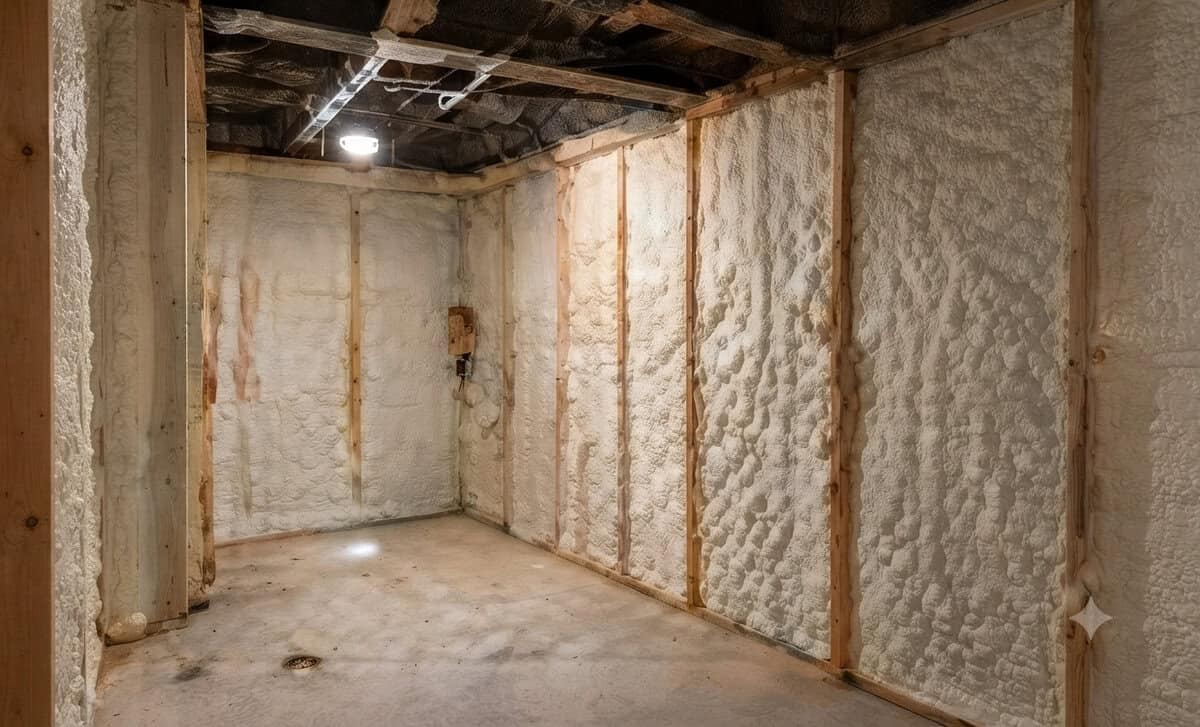
Spray foam is a two-component building insulation material. When the chemicals meet at the spray tip, a chemical reaction occurs that causes the mixture to expand and harden into a foam. That foam fills gaps, seals air leaks, and acts as thermal insulation – all at once.
The two components are typically polyurethane-based, and they behave very differently depending on how the foam is formulated. That difference is what separates open cell foam from closed cell foam.
Open Cell Spray Foam: What It Is and How It Works
Open cell foam gets its name from its structure. The tiny cells that form during the chemical reaction are intentionally left open, giving the foam a soft, spongy texture. Think of it like the inside of a slice of bread – porous and flexible.
Because the cells are open, air and moisture can move through the material. This affects its performance in a few key ways.
Characteristics of Open Cell Foam
Open cell spray foam has a lower density than its closed cell counterpart, which keeps material costs lower. It typically achieves an R-value (insulation) of around R-3.5 to R-4 per inch, which is decent but not exceptional.
The biggest trade-off is moisture. Open-cell foam is not a vapor barrier on its own. In humid climates, this matters more than most homeowners realize. Moisture infiltration through walls and attic spaces can lead to mold and structural damage if the insulation choice does not account for local climate conditions.
On the upside, open-cell foam is excellent at soundproofing. It absorbs sound more effectively than closed cell foam, making it a popular choice for interior walls between living spaces.
Closed Cell Spray Foam: The High-Performance Option
Closed-cell foam is a fundamentally different product. The cells formed during application are completely sealed, creating a rigid, dense material. The result is a foam that blocks air, resists moisture, and delivers a significantly higher R-value per inch.
Closed cell foam typically achieves an R-value of R-6 to R-7 per inch – nearly double that of open cell foam. It also acts as a built-in vapor barrier, which is critical in humid and coastal environments.
Characteristics of Closed Cell Foam
The higher density of closed-cell foam gives it structural rigidity. When applied to walls or roof decking, it actually adds strength to the assembly. This can be a meaningful benefit in areas prone to high winds.
Closed-cell foam also provides superior air barrier performance. It dramatically reduces air infiltration, meaning conditioned air stays inside while outdoor heat and humidity stay out. For homeowners running air conditioning heavily, this translates directly into lower energy bills.
The main drawback is cost. Closed-cell foam costs significantly more per square foot than open-cell foam. However, its efficiency gains often offset that investment over time.
Open Cell vs Closed Cell Spray Foam: A Direct Comparison
Here is a side-by-side look at how these two building insulation options stack up:
| Feature | Open Cell Foam | Closed Cell Foam |
|---|---|---|
| R-value per inch | R-3.5 to R-4 | R-6 to R-7 |
| Vapor barrier | No | Yes |
| Density | Low | High |
| Moisture resistance | Low | High |
| Soundproofing | Excellent | Moderate |
| Cost | Lower | Higher |
| Air sealing | Good | Excellent |
Which One Is Right for Your Climate?
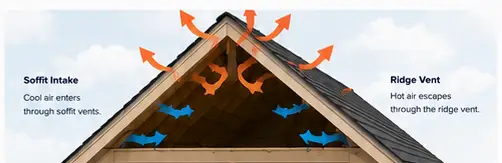
Climate is the deciding factor for most homeowners. In Boca Raton, the combination of heat, humidity, and hurricane risk creates a very specific set of demands that not every insulation product meets equally.
The Case for Closed Cell in South Florida
Closed cell foam is generally the stronger recommendation for homes in Boca Raton. Here is why. The constant humidity means moisture infiltration is a persistent risk, and open cell foam’s inability to function as a vapor barrier can allow moisture to accumulate inside wall cavities and attic spaces over time. That moisture becomes a breeding ground for mold and a slow-moving threat to indoor air quality.
Beyond moisture, closed-cell foam’s high R-value helps homes combat the relentless heat that drives up air conditioning costs. When your building insulation is doing its job well, your HVAC system works less. That is efficient energy use in the most practical sense.
Closed-cell foam also complements storm-resilient construction. It stiffens roof decking and wall assemblies, which can contribute to better performance under high-wind conditions – a real-world benefit that matters in South Florida.
When Open Cell Makes Sense
Open cell foam still has a legitimate role in some applications. Interior partition walls, for example, can benefit from its soundproofing qualities. If a contractor is spray foaming an interior wall between a bedroom and a living area, open cell foam may be the better acoustic choice.
It can also be used in attic spaces in certain configurations, particularly when combined with proper vapor control strategies. However, this requires careful planning and should not be a default decision made without considering moisture dynamics specific to your home’s location and construction.
What About Other Insulation Options?
Some homeowners compare spray foam to traditional products like fiberglass (glass wool) batts. Fiberglass is less expensive upfront and widely available, but it does not air-seal on its own. Air can still move around and through fiberglass batts, which limits their ability to prevent air infiltration and moisture movement in humid climates.
Spray foam – whether open or closed cell – provides both insulation and air sealing in a single application. That dual function is what makes it worth the premium over fiberglass in most cases, especially in climates like Boca Raton’s.
Open Cell vs Closed Cell Spray Foam Cost
Price is often the deciding factor. Open cell foam usually costs less per board foot because it uses less material and expands more during application. Closed cell foam costs more, but it delivers roughly twice the R-value per inch. That means you need less thickness to reach the same insulation level.
Open cell foam typically provides an R-value of about 3.5 to 3.8 per inch. Closed cell foam usually provides about 6 to 7 per inch, and at around 1.5 to 2 inches thick it also works as a vapor retarder. The U.S. Department of Energy insulation guide explains how R-value and climate zone work together when choosing insulation.
When you compare quotes, look at the total R-value installed, not just the price per square foot. A cheaper open cell job that falls short on R-value can cost more over time in cooling bills.
Building Code Considerations
Building codes in Florida have specific requirements around energy efficiency and moisture management. Certain applications require a vapor barrier or a minimum R-value that open cell foam may not achieve on its own. Closed-cell foam more reliably meets these thresholds in a single layer, which simplifies the installation and reduces the risk of a failed inspection.
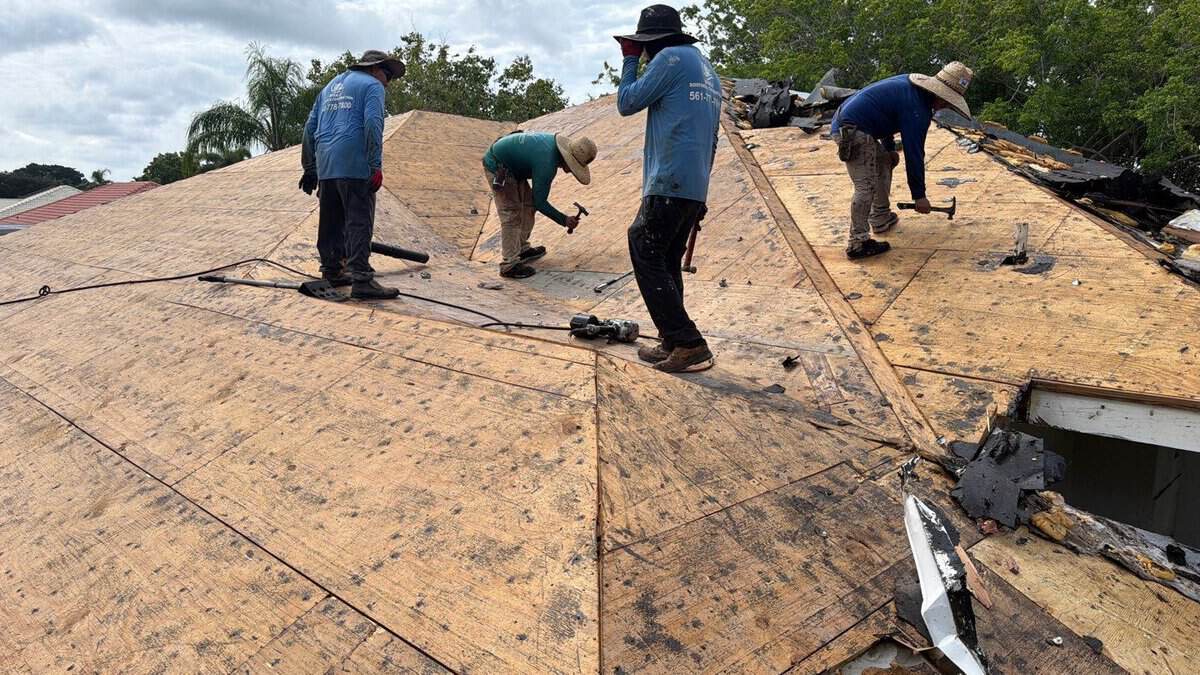
If you are planning a roofing project alongside spray foam work, it is worth discussing code compliance with your contractor early in the process so there are no surprises at inspection.
Does Spray Foam Work Under or Over Roofing Systems?
Spray foam is often applied to the underside of roof decking in what is called an unvented attic assembly. This keeps the attic within the conditioned envelope of the home, reducing heat gain and protecting HVAC equipment stored in the attic from extreme temperatures.
For homeowners with metal roofing, tile roofing, or flat roof systems, spray foam applied to the roof deck can be a significant performance upgrade. It reduces energy loads, controls moisture, and in the case of closed cell foam, adds structural support to the deck itself.

Frequently Asked Questions
Which is better for a South Florida attic, open cell or closed cell spray foam?
Closed cell foam is often the stronger choice in humid, storm-prone areas because it resists moisture and adds rigidity. Open cell foam can still work well in conditioned attics when the roof deck is dry and properly ventilated or sealed.
Can spray foam cause roof problems?
Spray foam applied to the underside of a roof deck can hide leaks, which makes them harder to spot. Have your roof inspected before insulation goes in, and make sure the roofer and insulation installer know about each other’s work.
Does spray foam insulation qualify for tax credits?
Some insulation upgrades have qualified for federal energy efficiency tax credits. Rules change, so check current ENERGY STAR tax credit information or speak with a tax professional before you buy.
Choosing the Right Spray Foam for Your Home
Choosing between open cell and closed cell spray foam is not a guessing game – it is a decision that should be made based on your climate, your budget, and the specific part of your home being insulated. In Boca Raton, where humidity, heat, and storm risk are everyday realities, closed-cell foam is usually the right call. If you are planning a roof replacement or upgrade and want insulation that actually performs, reach out to Whale Roofing and Construction for a free inspection.