

If you have a flat or low-slope roof, you’ve probably come across two options that seem almost identical at first glance: TPO and PVC roofing. Both are single-ply membrane systems. Both are white. Both are often installed using heat-welded seams.
So what’s actually different between them – and why does it matter for your home?
The short answer is that PVC wins when it comes to chemical resistance. But before you make a decision based on that alone, it’s worth understanding what that actually means in practice, especially if you own a home in Boca Raton where flat roofs deal with more than just rain.
What Are TPO and PVC Roofing Membranes?
TPO: The Popular, Cost-Effective Option
TPO stands for Thermoplastic Polyolefin. It’s a single-ply roofing membrane made from a blend of rubber and plastic compounds. It gained popularity quickly because it’s affordable, energy-efficient, and relatively easy to install.
TPO membranes are typically white or light-colored, which reflects sunlight rather than absorbing it. That reflectivity is a major reason why flat roof homeowners in warm climates gravitate toward it – lower attic temperatures often translate to lower cooling costs.
PVC: The More Chemically Resilient Membrane
PVC stands for Polyvinyl Chloride. Like TPO, it’s a single-ply thermoplastic membrane. It’s also white, heat-weldable, and designed for flat or low-slope roofs.
The key difference lies in the base formulation. PVC membranes contain plasticizers that make the material more flexible. Their chemical formulation also gives PVC significantly better resistance to oils, grease, fats, and industrial chemicals – something that matters more than many homeowners expect.
The Chemical Resistance Difference – And Why It’s a Big Deal
What “Chemical Resistance” Actually Means for a Roof
Chemical resistance refers to how well a roofing membrane holds up when it comes into contact with substances that can degrade, soften, or break down synthetic materials.
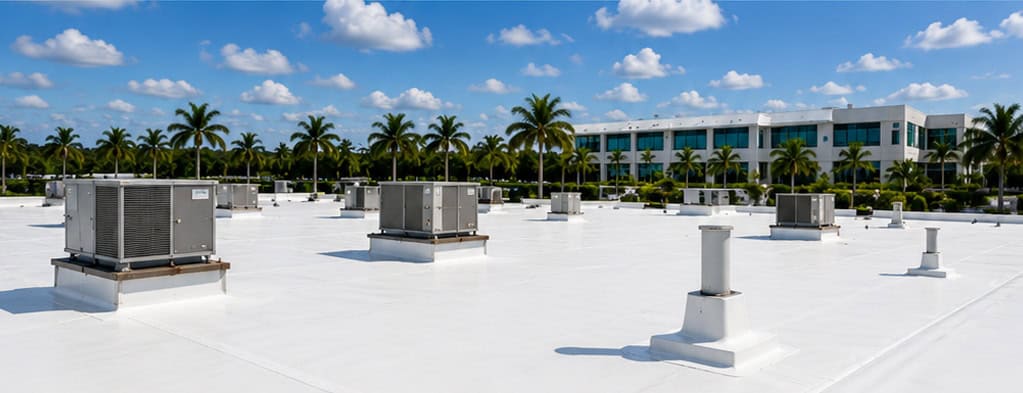
For most homeowners, this isn’t about toxic waste or industrial runoff. It’s about everyday things like rooftop HVAC units that can leak refrigerants or oils, nearby cooking exhaust vents on restaurants or multi-unit properties, bird droppings and organic matter, and grease traps or mechanical equipment installed on the roof.
PVC handles all of these significantly better than TPO does.
How TPO Responds to Chemical Exposure
TPO is not chemically inert. Exposure to oils, grease, and certain hydrocarbons can cause the membrane to swell, soften, or crack over time. This is a known limitation in the roofing industry.
If you have any HVAC systems, kitchen exhaust vents, or other equipment on your roof that could leak or release oily substances, a TPO membrane may degrade faster than expected. What starts as a small exposure can eventually compromise the membrane’s waterproofing ability.
How PVC Handles the Same Situations
PVC membranes were developed in part to meet the need for greater chemical resistance. They’ve been used in commercial settings like restaurants and food processing facilities for decades precisely because of how well they hold up to grease and oil exposure.
The plasticizers within PVC allow it to resist chemical penetration while maintaining flexibility. Even when exposed to harsh substances repeatedly, PVC is far less likely to show material breakdown.
For residential flat roofs that have rooftop equipment or sit near sources of chemical exposure, PVC is simply the more durable choice in that specific context.
TPO vs PVC: How They Compare Across the Board
Chemical resistance is the headline, but it’s not the only factor worth comparing. Here’s how the two membranes stack up across the areas homeowners typically care most about.
Cost
TPO is generally the more affordable option. Material costs are lower, and because it’s widely used, installation is straightforward for experienced roofers. PVC typically costs more per square foot, both in materials and sometimes in labor.
If budget is a primary concern and your roof doesn’t face significant chemical exposure, TPO offers solid value.
Durability and Longevity
Both membranes, when properly installed, can last 20 to 30 years. PVC has a longer track record – it’s been in use since the 1960s – and many roofing professionals consider it the more proven material when it comes to long-term performance.
TPO is newer and has been refined significantly over the years, but older formulations had inconsistency issues. Modern TPO is much better, though PVC still tends to edge it out in long-term durability assessments.
Energy Efficiency
This one is essentially a tie. Both membranes are typically white and have high solar reflectance. In a place like Boca Raton where the sun is relentless, both can contribute to lower cooling energy use.
Flexibility and Weather Performance
PVC membranes contain plasticizers that keep the material flexible even in cold temperatures. This matters more in northern climates, but flexibility also contributes to how well a membrane handles roof movement, expansion, and contraction caused by heat cycles.
In South Florida, thermal cycling is a real factor. Roofs heat up significantly during the day and cool at night. PVC’s flexibility can help it handle this movement without cracking over time.
TPO is also flexible, though it can become stiffer in cooler conditions. Given Boca Raton’s consistently warm temperatures, this difference is less pronounced than it would be further north.
Environmental Considerations
TPO is generally considered the more environmentally friendly option. PVC production involves chlorine and produces certain chemical byproducts during manufacturing. TPO doesn’t carry the same concerns.
At end of life, TPO is also easier to recycle. For homeowners who prioritize sustainability, this is a legitimate consideration.
Seam Integrity
Both membranes use heat-welded seams, which are stronger and more reliable than adhesive or tape-based connections. When properly executed by a trained installer, heat-welded seams on both systems create a continuous waterproof barrier.
Seam integrity is less about which membrane you choose and more about the quality of installation. A poorly installed PVC roof will fail faster than a well-installed TPO roof – which is why choosing an experienced flat roofing contractor matters as much as choosing the right material.
Which One Is Right for Your Flat Roof?
Choose TPO If…
TPO makes sense when budget is a primary concern and your roof has minimal exposure to oils, grease, or chemicals. It’s a strong performer in clean environments and works well for residential flat roofs with straightforward drainage and standard rooftop equipment.
If energy efficiency and upfront cost are driving your decision, TPO delivers excellent value.
Choose PVC If…
PVC is the right call when your roof has – or might have – exposure to chemical substances. This includes homes with rooftop HVAC units that could leak, properties near commercial cooking exhaust, and any situation where long-term durability under stress is the priority.
It’s also worth considering if you’ve had a previous membrane fail earlier than expected. PVC’s track record gives it an edge when you need a material you can count on for the full lifespan.
What Homeowners in Boca Raton Should Know
Flat roofs are common in South Florida’s residential architecture. Low-slope designs shed water differently than pitched roofs, and they require membranes that can handle Florida’s specific combination of intense UV exposure, heavy rainfall, and heat.
Both TPO and PVC handle UV well when they’re white and reflective. But Boca Raton homes also tend to have rooftop HVAC condensing units – which can develop refrigerant or oil leaks over years of operation. That small but real risk of chemical exposure is worth factoring into your decision.
It’s also worth noting that flat roof installation quality varies. No matter which membrane you choose, the outcome depends heavily on the installer. Heat-welded seams need to be properly executed, flashing around penetrations needs careful attention, and drainage design needs to be correct from the start.
For homeowners navigating these decisions, Whale Roofing & Construction offers honest guidance on flat roofing systems that are built to hold up in South Florida conditions. Their team handles flat roof installations with in-house professionals – not subcontractors – which means consistent workmanship from start to finish.
Common Questions About TPO and PVC Roofing
How long does each membrane typically last?
Both TPO and PVC membranes are designed to last 20 to 30 years with proper installation and maintenance. PVC has a longer documented history, but modern TPO formulations are also durable and long-lasting.
Can either membrane be repaired if it’s damaged?
Yes. Both membranes can be repaired using compatible patches and heat welding. Repairs are most effective when done early, before a small area of damage spreads or allows water to infiltrate the roof system underneath.
Is white the only color available?
Both membranes come primarily in white or light grey for energy efficiency. Some manufacturers offer other colors, but white is standard and most practical in warm, sunny climates where solar reflectance reduces cooling costs.
Which membrane holds up better in heavy rain?
Both are designed for waterproofing, and neither has a significant advantage over the other in handling rain volume specifically. What matters more is proper drainage design and seam quality, which ensure water moves off the roof without pooling.
Does installation cost differ significantly between the two?
TPO is generally less expensive to install, both in material and labor costs. PVC typically runs higher, though the difference varies by project size and complexity. For many homeowners, the chemical resistance and durability of PVC can justify the cost premium – particularly when rooftop equipment is a factor.
Choosing Between TPO and PVC for Your Flat Roof
TPO and PVC are both solid flat roofing options, but they’re not interchangeable. If chemical resistance matters for your roof – and for many Boca Raton homes with rooftop equipment, it does – PVC is the stronger choice. If you’re working within a tighter budget and your roof faces minimal chemical exposure, TPO delivers real value. The right answer depends on your specific situation. To explore your flat roofing options with a team that knows South Florida roofs, reach out to Whale Roofing & Construction at 561-408-4433 for a free inspection and honest recommendation.